
Abrasive Wheels - Wheel Mounting on Portable Grinders
On this page
How should you mount straight wheels?
Back to top- Inspect and conduct "a ring test" to look for damages before mounting a wheel.
- Compare the machine speed to the speed marked on the wheel before mounting the wheel. Never exceed the speed marked on the cup wheel.
- Disconnect portable machines from their power source before you begin mounting or removing wheels.
- Check the flanges for distortion or abrasion. When flanges are distorted or warped, the contact area is reduced.
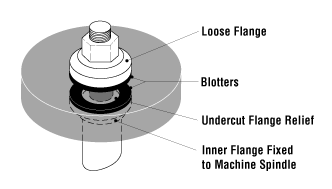
- Flanges must not be reversed.
- Use blotters to cushion flange pressure.
- Do not use flat washers, a nut, old blotters or other filler materials in place of flanges. This setup will not support the wheel but rather it will damage the wheel and cause the wheel to wobble, pull out the bushing, and break.
- The fixed and loose flanges should have the same diameter and have undercut relief. The minimum flange size is 1/3 of the wheel diameter.
- Thread the wheel on the machine and hand tighten. Don't use power tools to put the wheel on, as removal will be difficult and the wheel can be damaged.
- Make sure that all surfaces between the wheel, blotters, and flanges that should be in contact with each other during mounting are flat and free of foreign particles.
- The wheels must fit freely on the spindle.
- The wheel must also fit so that it turns freely under the guard.
- Make sure the guard is attached according to the manufacturer's instructions.
- Test the wheel and machine by running it at operating speed in a protected area for at least one minute before grinding.
- Wear all necessary personal protective equipment such as eye, face, hearing and respiratory protection, gloves, arm guards, and safety shoes.
How should you mount cup wheels?
Back to top- Select the proper abrasive cup wheel for the application and tool you are using.
- Visually inspect all abrasive cup wheels for any damage as well as the package. Never use a damaged wheel.
- Compare the machine's speed to the speed marked on the wheel before mounting the wheel. Never exceed the speed marked on the cup wheel.
- Disconnect portable machines from their power source before you begin mounting or removing wheels.
- Inspect the machine and its wheel guard. Never use a machine that has been damaged or one that does not have a proper abrasive cup wheel guard.
- Inspect and clean the machine's back flange and mounting threads.
- Always follow the machine builder's and wheel manufacturer's instructions when mounting or using an abrasive cup wheel.
- Thread the wheel on the machine and hand tighten. Do not use power to tighten the wheel, as removal will be difficult and the wheel can be damaged.
- Wear all necessary personal protective equipment such as eye, face, hearing and respiratory protection, gloves, arm guards, and safety shoes.
- Test the machine and wheel by placing the open end of the wheel guard under a workbench or into a steel drum and start the machine. Run the machine and wheel at operating speed for one minute.
- Do not allow anyone to stand near or in line with the guard's opening. If a wheel was damaged during storage or transportation, it will most likely break during this test.
- If you notice any unusual vibrations or noises, STOP. Examine the grinder and fix the problem immediately.
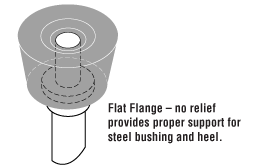
- For cup wheels, use a flat, unrelieved flange with a threaded hole mounting. This flange prevents strain on the bond that anchors the bushing to the wheel cup.
What should I watch for when mounting cone and plug wheels?
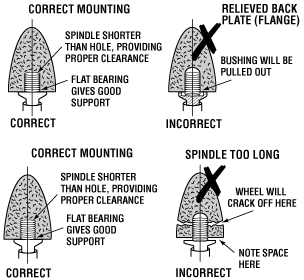
Back to topFor cone and plug wheels, the common cause of breakage occurs when the spindle threads are either too short or too long for the tapped hole in the wheel.
The wheels should be mounted against a back flange that is flat, securely fastened, square to the spindle axis, and is able to support the wheel properly.
How should I mount depressed centre wheels?
Back to top- Use adapters suitable for the type of the wheel. For example, type 27 and 28 wheels require specially designed adaptors because of their shape and usage.
- Replace any worn or bent reusable adapters. A damaged adapter will not mount properly.
- Do not reuse "throw-away" adapters.
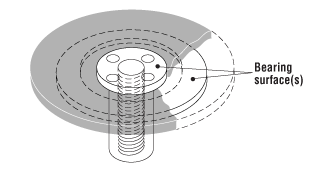
- Make sure that the grinder spindle shoulder runs true. The adapter must tighten against this shoulder. Use spacers provided with adapters if the spindle is too long.
- The wheel will wobble if the shoulder is not square with the spindle, or if the adapter does not tighten against the shoulder. This poor fit can result in wheel breakage and injuries to the operator or a nearby worker.
- Fact sheet last revised: 2023-09-18