
Abrasive Wheels - Handling and Storing of Bonded Abrasive Wheels
On this page
What safety precautions should be followed when using abrasive wheels?
Back to top- Select the right wheel for the job. A wheel is dangerous when used for work for which it was not designed. Booklets from wheel and machine manufacturers provide technical information on wheel selection and proper use.
- Use only wheels marked with the wheel type and maximum speed in revolutions per minute (rpm).
- Inspect the wheel when you purchase it, and again before using if it was stored. .
- Visually examine the wheel for any signs of damage such as chips and gouges.
- Use the "ring test" to check if the wheel is damaged. Ring tests do not apply to small wheels 10 cm (4 in.) diameter and smaller.
- Use abrasive wheels only on machines with safety guards. Exceptions may apply to some classes of wheels. Always check with the manufacturer’s instructions.
What is the "ring test?"
Back to top- The ring test is one way to check whether the wheel is cracked or damaged. Make sure the wheel is clean and dry. Tap wheels gently with a non-metallic tool such as a plastic screwdriver handle for light wheels and a wooden mallet for heavy wheels.
- Tap wheels about 45 degrees on each side of the vertical center line and about 3 to 5 cm (1 or 2 in) from the periphery. Repeat the test by rotating the wheel 45 degrees.
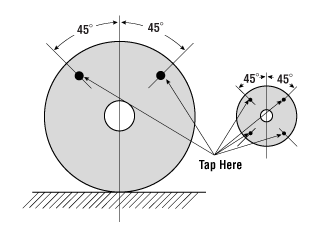
An undamaged wheel will make a metallic ring sound. Do not use any wheel that sounds dead or cracked and does not have a clear ring.
How should I handle and store the abrasive wheels?
Back to topAll abrasive wheels are fragile. Do not use a wheel if it is damaged or suspected of being damaged.
- Handle the wheels carefully. Avoid dropping or bumping.
- Do not roll a wheel on its edge.
- Transport wheels in containers designed to provide support for the wheels if they are too heavy to carry by hand.
- Do not pile other items such as tools on top of wheels.
- Store wheels in racks or bins with dividers for different types of wheels and ensure easy access and less handling. Leave wheels that were shipped on a pallet stored as shipped until needed for use.
- Place straight or tapered wheels on their end in a cradle or chocked position to prevent rolling or damage.
- Never store wheels near excessive heat or cold, in contact with water, oil or moisture, nor in drawers with loose tools.
- Store wheels in a dry area. Prevent the area from freezing temperatures and any temperature or humidity that causes condensation on the wheels.
- When selecting the racks, bins, boxes or drawers for storage consider the size and type of wheels to be stored: for example, lay flat thin bonded wheels, and support larger wheels in racks. Always follow the manufacturer's instructions.
- Sort and store wheels so that older wheels can be selected first.
- Keep the information from the manufacturer in the storage area, and available to the machine operator.
- Follow the manufacturer's instructions for the length of time a wheel should be stored.
- Fact sheet last revised: 2023-09-27