
Garages - Hydraulic Lifts - General Information
On this page
What should I know about using hydraulics?
Back to topImproperly maintained or adjusted hydraulic parts can cause serious injury.
Always use caution when working on a hydraulic system. Even when the system is shut down, hydraulic oil can still be under pressure.
If the controls for more than one lift are in one location, they should be numbered or colour-coded to ensure operators know which control operates each individual lift.
What should I know before using hydraulic lifts?
Back to top- Only people properly trained in using hydraulic lifts and positioning vehicles on lifts should use hydraulic lifts.
- Customers and other unauthorized people should not be in the work area.
- Make sure that "dead stick" type controls return to the neutral or "off" position when released.
- Make sure that the hydraulic pressure is not higher or lower than the recommended level. High pressures can cause ruptures, while low pressures can result in the ram unexpectedly dropping, crushing people or items below the load.
- Use lift only for the job for which it was designed.
- Inspect and service controls and equipment regularly according to manufacturer's instructions.
- Check packing nuts and surface bolts around cylinders on hydraulic hoists as recommended in the manufacturer's manual.
- Inspect pistons for dirt, damage or other abnormal conditions regularly.
- Lubricate the hoist and check for the tightness of the fasteners.
- Check the hydraulic fluid level and change hydraulic oil according to the manufacturer's directions (frequency, type of oil, etc.).
- Check cables, lift pads and adaptors for wear.
- Make sure surface-mounted lifts are anchored appropriately. Inspect the anchor bolts and the floor for cracks.
- Check for bent arms, cracks in welds or damage or wear. Check for cracked or loose fittings that may allow the hose to detach.
- Replace damaged parts with those recommended by the lift manufacturer.
- Only properly trained lift service personnel should repair hydraulic lifts.
- Use lift adaptors designed for contact on the lifts.
- Make sure that the lift area is clean and free of oil, tools, equipment, hoses, wires, etc., before a car or truck is driven into the work area.
- Make sure that the weight of the vehicle does not exceed the lift capacity of the hydraulic lift.
- Know how to find the centre of gravity of the vehicle and where to position the vehicle on the lift.
- Check the vehicle's lifting points vehicle recommended by the manufacturer to examine for rust, damage or oil.
When should I not use a hydraulic lift?
Back to topDo not use the lift if it:
- Raises very quickly.
- Jerks or jumps when raised.
- Slowly settles down after being raised.
- Slowly rises, either when in use or when not in use.
- Comes down very slowly.
- Blows oil out of the exhaust line.
- Leaks oil at connections.
What should I do before servicing the lift?
Back to top- Follow the manufacturer's instructions. Servicing procedures vary from one hydraulic system to another.
- Lower hydraulically powered attachments to the ground or support them on suitable metal stands or blocks.
- Shut off the engine that powers the hydraulic pump.
- Move the hydraulic lever back and forth a few times to release residual pressure.
- Lock-out levers and power switches so the hydraulic system cannot be started while someone is doing repairs.
- Let the hydraulic system cool down.
Hydraulic fluid escaping through pinhole leaks is difficult to see, but its high pressure can puncture your skin. Have a doctor treat any hydraulic fluid skin punctures immediately.
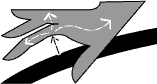
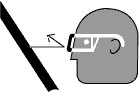
- Check for leaks by passing a piece of cardboard or wood over the suspected area.
- Store hydraulic fluids away from sparks or flames.
- Clean up spills immediately.
- Do not smoke in the autobody area.
- Do not use your hands to search for leaks. Hydraulic fluid can pierce the skin, and "small" injuries can have serious consequences. Get medical help immediately.
- Fact sheet last revised: 2023-10-31