
Landscaping - Infectious Waste
On this page
What is infectious waste?
Back to topInfectious wastes (also called biomedical waste) include human waste, animal waste and objects and materials contaminated with blood and body fluids containing disease-causing micro-organisms or viruses.
Occasionally, you may encounter discarded hypodermic needles, syringes, condoms, and other objects or materials contaminated with blood or body fluids. You must exercise special precaution in handling such materials and objects. Often these biological wastes are contaminated with germs which can make you ill. Major concerns are the spread of hepatitis B and HIV/AIDS. Dead animals can also transmit diseases (like rabies) and should also be treated as infectious waste. If it is not part of your job duties to remove dead animals, contact an animal control agency for removal.
Regulations by local, provincial, and federal agencies usually specify that infectious waste must be segregated, packaged, and disposed of in a specific manner. Check your local regulations for details.
There are many tips in other Landscaping OSH Answers documents.
What are some safety tips to know when dealing with infectious waste?
Back to topSince parks and some other outdoor areas are places where drugs may be used and where human waste, animal waste and objects and materials contaminated with blood and body fluids may be found, supervisors and employees should anticipate that infectious waste may be encountered.
DO
- Ask your supervisor for training, if he or she has not done so already, so you:
- understand potential hazards
- know your roles and responsibilities
- are familiar with regulations
- Wear gloves and use disposable towels or other means of cleaning (e.g., brooms or shovels) that will stop direct contact between you and infectious waste, such as any blood or body fluids.
- Wear puncture-resistant gloves and safety boots if there is a risk of puncture (e.g., from needles, sharp objects, etc.).
- Wear respiratory protection if you must clean up waste, leaves or dust which may contain mouse or bird waste. Mice can carry the hantavirus which can become airborne with dust and may be inhaled by workers. Bird waste may transmit psittacosis, which is an infectious disease in humans that has mild, non-specific flu-like symptoms.
- Make sure your tetanus immunization is up to date (recommended every 10 years).
- Consider all contaminated wastes as infectious.
- Handle all contaminated wastes very carefully to prevent body contact and injury.
- Use pliers or tongs to gently pick up needles or glass. Do not touch the needle directly if possible.
- Dispose of infectious waste in a puncture-resistant container such as a bucket or box with a secure lid and lined with a leak-proof, puncture-resistant plastic.
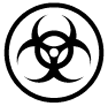
- Post a biological hazard symbol on the waste container.
- Wash hands to reduce the risk of infection.
- Report any injuries immediately.
- Call your local public health department or police for further assistance.
More information is available in the OSH Answers Sanitation and Infection Control for Cleaning Staff.
What should I avoid doing?
Back to top- Do not load an infectious waste container beyond its capacity.
- Do not empty or carry the container by putting your fingers on the inside. Wear appropriate gloves and empty waste paper baskets (or other containers) by holding the container on the outside.
- Do not hold the top edge (or lip) of waste containers or garbage cans with your fingers on the inside surface of the container – your fingers could get cut or punctured from broken glass, syringes or used needles if you dump the contents into another container.
- Do not compact infectious waste. This process may disperse the contamination into the air. Also, your puncture-resistant gloves could actually be punctured by a used syringe needle, for example, if you try compacting the contents with your hands.
- Do not mix infectious waste with the regular trash.
- Do not reach into any waste container or receptacle which may contain hazardous waste.
- Fact sheet last revised: 2023-03-23