
Materials Handling - Overhead Crane Operation
On this page
What should you do before moving a load?
Back to top- Make sure you have the required training, qualifications, or certification as determined by your jurisdiction to operate the crane.
- Make sure the crane is suitable to lift and travel the load.
- Make sure the job site is planned and laid out. Allow room for emergency vehicles to enter if necessary. Do not work near overhead power lines, etc.
- Check ground conditions to ensure stability.
- Visually inspect the crane before use.
- Make sure all loose materials, parts, blocking and packing have been removed from the load before lifting.
- Remove any slack from the sling and hoisting ropes before lifting the load.
- Make sure that the lifting device seats in the saddle of the hook.
- Verify that the load is not heavier than the maximum load capacity.
How should you move loads safely?
Back to top- Move crane controls smoothly. Avoid abrupt, jerky movements of the load.
- Follow signals only from one slinger in charge of the lift, except a stop signal.
- Use agreed upon signals.
- Make sure everyone is away from the load before hoisting. Sound a bell, siren or other warning device and start to hoist slowly.
- Make sure all slings, hooks, hardware, etc. are appropriate for the loading being lifted, are in good working order, and that all angles for the slings are appropriate.
- Make sure nothing links or catches on the load while raising it or travelling.
- Make sure that nothing obstructs the movement of a load.
- Lift the load a small amount to verify that the braking system is functioning properly before proceeding with the lift.
- Keep the load under control when lowering a load. If the braking system stops working, the load can usually be lowered by reversing the hoist controller to the first or second point.
- Set the load on blocking, not the sling itself.
- Do not lower the load below a level that corresponds to less than two full wraps of wire rope left on the drum.
- Stay in a crane cab during power failure. Place controls in "off" position, attract attention and wait for help.
What should you do before leaving the crane?
Back to top- Remove the load hanging on crane hooks.
- Raise all hooks to a mid-position.
- Spot the crane at a designated location.
- Before closing the main switch, make sure that all controllers are in the "off" position.
What should you avoid when operating an overhead crane?
Back to top- Do not carry anything in your hands when going up and down ladders. Items that are too large to go into pockets or belts should be lifted to or lowered from the crane by rope.
- Do not operate a crane if limit switches are out of order, or if cables show defects.
- Do not lower the blocks below the point where less than two full wraps of cable remain on the drum.
- Do not attempt lifts beyond the rated load capacity of a crane or slings.
- Do not lift a load from the side. Centre the crane directly over the load before hoisting to avoid swinging the load.
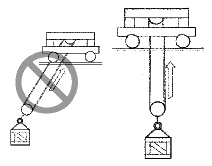
- Do not allow anyone to ride on a load or hooks.
- Do not leave slings dangling from the load hook. Have sling hooks placed on the sling ring when carrying slings to the load.
- Do not raise loads higher than necessary to clear objects.
- Do not move or pass a load over workers.
- Do not reverse a motor until it has come to a full stop except to avoid accidents.
- Do not walk on the crane runway.
- Do not leave suspended loads unattended.
- Fact sheet last revised: 2019-04-08