
Materials Handling - Hoist Wire Rope
On this page
Who should inspect wire ropes and when?
Back to top- Only trained personnel should carry out an inspection of wire ropes.
- Inspect a wire rope when installing it.
- Visually inspect wire ropes every working day and at the start of each shift.
- Keep records of daily inspections.
- Operator’s must check wire ropes every working day during normal operation (e.g., at the start of each shift).
- Thoroughly inspect wire ropes used in normal operations weekly.
- Wire rope that has not been used in a month must be inspected thoroughly before use.
- Maintain a record for each rope that includes the date of inspection, type of inspection, the name of the person who performed the inspection, and inspection results.
How do you thouroughly inspect wire ropes?
Back to top- Use the "rag-and-visual" method to check for external damage. Grab the rope lightly and with a rag or cotton cloth, move the rag slowly along the wire. Broken wires will often "porcupine" (stick out) and these broken wires will snag on the rag. If the cloth catches, stop and visually assess the rope. It is also important to visually inspect the wire (without a rag). Some wire breaks will not porcupine.
- Measure the rope diameter. Compare the rope diameter measurements with the original diameter. If the measurements are different, this change indicates external and/or internal rope damage.
- Visually check for abrasions, corrosion, pitting, and lubrication inside the rope. Insert a marlin spike beneath two strands and rotate to lift strands and open rope.
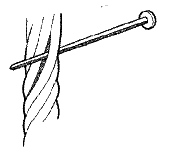
How to check the interior of the rope
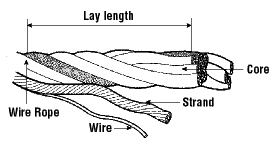
Wire rope elements
When should you stop using the rope and remove it from use?
Back to topAssess the condition of the rope at the section showing the most wear. Discard a wire rope if you find any of the following conditions:
- In running ropes (wound on drums or passed over sheaves), 6 or more broken wires in one rope lay length; 3 or more broken wires in one strand in one rope lay. (One rope lay is the distance necessary to complete one turn of the strand around the diameter of the rope.)
- In pendant standing ropes, 3 or more broken wires in one lay length.
- Wear of 1/3 of the original diameter of the individual outside wires.
- Kinking, crushing, cutting, unstranding, bird caging or other physical damage that has distorted the shape of the wire rope.
- Heat damage (check for burn marks, discoloration of the metal).
- Excessive stretch or sharp reduction in the rope diameter.
- Knots or splices (except eye splices) in a wire rope.
- Missing sling identification, such as manufacturer, workload limit, diameter or size.
What can cause a wire rope to break?
Back to top- Wear on areas that are in contact with hoist sheaves and drums.
- Corrosion from lack of lubrication and exposure to heat or moisture (e.g., wire rope shows signs of pitting). A fibre core rope will dry out and break at temperatures above 120°C (250°F).
- Fatigue from repeated bending even under normal operating conditions.
- Overloading the safe working load limit. Follow manufacturers' charts.
- Mechanical abuse - crushing, cutting or dragging of rope.
- Being used when frozen - if work is performed at lower than 15.5°C, the use of the sling should follow the manufacturer's recommendations.
- Kinks from the improper installation of new rope, the sudden release of a load or knots made to shorten a rope. A kink cannot be removed without creating a weak section. Discarding kinked rope is best.
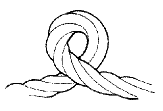
Kinked wire rope
- Fact sheet confirmed current: 2022-05-26
- Fact sheet last revised: 2022-05-26