
Platforms - Bucket (Aerial Devices)
On this page
What are items to check during the daily inspection?
Back to top- Check all welds between cylinders and booms for cracks or wear.
- Inspect all pivot pins for the security of their locking devices.
- Check all exposed cables, sheaves and levelling devices for wear and secure attachment.
- Inspect hydraulic system for frayed hoses, deterioration, and leaks.
- Check lubrication and fluid levels.
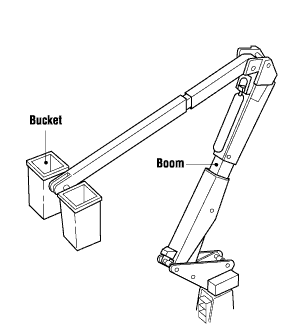
- Inspect boom and basket for cracks or abrasions.
- Check for the load capacity posting, and other operational and instructional markings.
- Operate boom from ground controls through one complete cycle. Check for unusual noises and uncontrolled movements.
- Check that emergency controls and safety devices are operational.
- Keep a log of inspections and related items or repairs.
What should you do when using a bucket or other aerial device?
Back to top- Wear a safety harness connected to the boom. Do not attach safety harness to adjacent pole or structure.
- Ensure that no one is in the area before lowering stabilizers, outriggers or the boom.
- Ensure that each axle is horizontal when the vehicle is parked on a hill. Work with the boom pointed uphill beyond the vehicle's centre.
- Protect a roadway job site with traffic warning signs, lights and barricades. Determine if extended boom movements will interfere with traffic.
- Secure all tools when not in use.
- Maintain the recommended distance from electrical wires unless you and the bucket are certified for electrical work.
- Face the direction of travel.
- Operate hydraulic controls slowly for smooth platform motion.
- Be aware of the other possible hazards including other persons, or weather.
What should you not do?
Back to top- Do not stand on top of a bucket or use planks or ladders to gain extra height.
- Do not enter or leave a bucket by walking on the boom.
- Do not exceed the rated load limit.
- Do not ride from one job to another in the bucket.
- Do not climb from bucket to another elevated position without being secured to the new position.
- Do not work above other workers. Clear the area below.
- Do not throw tools to or from an elevated bucket.
- Do not attempt to slow any air or hydraulic leak by using your hand or body.
- Do not move the machine when the platform is raised.
- Fact sheet last revised: 2018-01-03