
Powered Hand Tools - Saws - Sabre, Jig and Reciprocating
On this page
What should you do before start cutting with powered hand saws?
Back to top- Wear safety glasses or goggles, or a face shield (with safety glasses or goggles).
- Disconnect power supply before changing or adjusting blades.
- Use lubricants when cutting metals.
- Keep all cords clear of cutting area.
- Position the saw beside the material before cutting and avoid entering the cut with a moving blade.
- Make sure guards, if present, are installed and are working properly.
What should you do to work with powered hand saws safely?
Back to top- Hold reciprocating saw with both hands.
- Remember sabre saws cut on the up stroke.
- Secure and support stock as close as possible to the cutting line to avoid vibration.
- Keep the base or shoe of the saw in firm contact with the stock being cut.
- Select the correct blade for the material being cut and allow it to cut steadily. Do not force it. Clean and sharp blades operate best.
- Set the blade to go no further than 0.32 to 0.64 cm (1/8 to 1/4 inch) deeper than the material being cut.
- Do not start cutting until the saw reaches its full power.
- Do not force a saw along or around a curve. Allow the machine to turn with ease.
- Do not insert a blade into or withdraw a blade from a cut or lead hole while the blade is moving.
- Do not put down a saw until the motor has stopped.
- Do not reach under or around the stock being cut.
- Maintain control of the saw always. Avoid cutting above shoulder height.
How should you start an external cut?
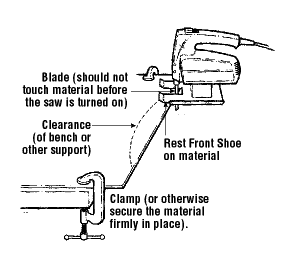
Back to top- Place the front of the shoe on the stock.
- Make sure that the blade is not in contact with the material or the saw will stall when the motor starts.
- Hold the saw firmly down against the material and switch the saw on.
- Feed the blade slowly into the stock maintaining an even forward pressure.
How should you start an inside cut?
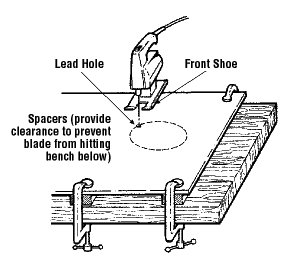
Back to top- Drill a lead hole slightly larger than the saw blade. With the saw switched off, insert the blade in the hole until the shoe rests firmly on the stock.
- Do not let the blade touch the stock until the saw has been switched on.
Refer to Powered Hand Tools - Basic Safety for Electric Tools for general safety tips.
- Fact sheet confirmed current: 2019-08-15
- Fact sheet last revised: 2013-12-20