
Welding - Fumes And Gases
On this page
- What are welding fumes?
- Can the composition of welding fumes vary?
- How do coatings affect the composition of welding fumes?
- How do I remove the coatings?
- What are the factors that affect worker exposure to welding fumes?
- What are welding gases?
- What are examples of welding gases?
- What are the hazards from welding gases?
- How can I prevent exposure to welding fumes and gases?
What are welding fumes?
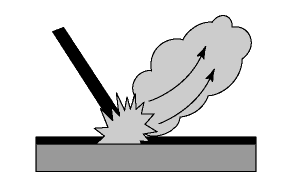
Back to topWelding fumes are a complex mixture of metals metallic oxides, silicates and fluorides. Fumes are formed when a metal is heated above its boiling point and its vapours condense into very fine, particles (solid particulates). Welding fumes generally contain particles from the electrode and the material being welded.
Can the composition of welding fumes vary?
Back to topYes, the composition of welding fumes is determined by the metals in the material being welded, the composition of the electrode, coatings, and other factors such as:
- Fluxes containing silica or fluoride produce amorphous silica, metallic silicates and fluoride fumes.
- Fumes from mild steel welding contain mostly iron with small amounts of additive metals (chromium, nickel, manganese, molybdenum, vanadium, titanium, cobalt, copper etc.).
- Stainless steels can have larger amounts of chromium, including hexavalent chromium, or nickel in the fume and lesser amounts of iron.
- Nickel alloys have much more nickel in the fume and very little iron.
How do coatings affect the composition of welding fumes?
Back to topVapours or fumes can come from coatings and residues on metal being welded. Some ingredients in coatings can have toxic effects. These ingredients include:
- metal working fluids, oils, and rust inhibitors
- zinc on galvanized steel (vaporizes to produce zinc oxide fume)
- cadmium plating
- chromates
- vapours from paints and solvents
- lead oxide primer paints
- plastic coatings
How do I remove the coatings?
Back to top- Remove coatings from the weld area to minimize the fume. The removal of coating will also improve weld quality.
- Use stripping products to remove coatings. Make sure to remove any residues before welding.
- Use wet slurry vacuum removal techniques for removing very toxic coatings.
- Do not grind coatings. Grinding dust may be toxic.
- Follow appropriate safety procedures and use the necessary personal protective equipment during the coating removal process, which will be based on risk assessments, manufacturer’s instructions, and potential exposures.
What are the factors that affect worker exposure to welding fumes?
Back to top- Type of welding process.
- Composition of welding rod.
- Filer metals and base metal used.
- Type of coatings present.
- Location (open area or confined space).
- Type of ventilation controls (mechanical or local).
- Work practices of welder (e.g. remove coatings, clean surfaces, proper positioning to avoid breathing fumes and gases, such as staying upwind when welding in open or outdoor areas).
What are welding gases?
Back to topWelding gases are gases used or produced during welding and cutting processes like shielding gases or gases produced by the decomposition of fluxes or from the interaction of ultraviolet light or high temperatures with gases or vapours in the air.
What are examples of welding gases?
Back to topGases used in welding and cutting processes include:
- shielding gases such as carbon dioxide, argon, helium, etc.
- fuel gases such as acetylene, propane, butane, etc.
- oxygen, used with fuel gases and also in small amounts in some shielding gas mixtures
Gases produced from welding and cutting processes include:
- carbon dioxide from the decomposition of fluxes
- carbon monoxide from the breakdown of carbon dioxide shielding gas in arc welding
- ozone from the interaction of electric arc with atmospheric oxygen
- nitrogen oxides from the heating of atmospheric oxygen and nitrogen
- hydrogen chloride and phosgene produced by the reaction between ultraviolet light and the vapours from chlorinated hydrocarbon degreasing solvents (e.g., trichloroethylene, TCE)
Gases are also produced from the thermal breakdown of coatings:
- Polyurethane coatings can produce hydrogen cyanide, formaldehyde, carbon dioxide, carbon monoxide, oxides of nitrogen, and isocyanate vapours.
- Epoxy coatings can produce carbon dioxide and carbon monoxide.
- Vinyl paints can produce hydrogen chloride.
- Phosphate rust-inhibiting paints can release phosphine during welding processes.
- Minimizing exposure to degreasing solvent vapours.
| Table 1 Source and Health Effect of Welding Fumes |
||
|---|---|---|
| Fume Type | Source | Health Effect |
| Aluminum | Aluminum component of some alloys, e.g., Inconels, copper, zinc, steel, magnesium, brass and filler materials. | Respiratory irritant. |
| Beryllium | Hardening agent found in copper, magnesium, aluminum alloys and electrical contacts. | "Metal Fume Fever." A carcinogen. Other chronic effects include damage to the respiratory tract. |
| Cadmium Oxides | Stainless steel containing cadmium or plated materials, zinc alloy. | Irritation of respiratory system, sore and dry throat, chest pain and breathing difficulty. Chronic effects include kidney damage and emphysema. Suspected carcinogen. |
| Chromium | Most stainless-steel and high-alloy materials, welding rods. Also used as plating material. Converts to hexavalent chromium during welding. | Increased risk of lung cancer. Some individuals may develop skin irritation. Some forms are carcinogens (hexavalent chromium). |
| Copper | Alloys such as Monel, brass, bronze. Also some welding rods. | Acute effects include irritation of the eyes, nose and throat, nausea and "Metal Fume Fever." |
| Fluorides | Common electrode coating and flux material for both low- and high-alloy steels. | Acute effect is irritation of the eyes, nose and throat. Long-term exposures may result in bone and joint problems. Chronic effects also include excess fluid in the lungs. |
| Iron Oxides | The major contaminant in all iron or steel welding processes. | Siderosis – a benign form of lung disease caused by particles deposited in the lungs. Acute symptoms include irritation of the nose and lungs. Tends to clear up when exposure stops. |
| Lead | Solder, brass and bronze alloys, primer/coating on steels. | Chronic effects to nervous system, kidneys, digestive system and mental capacity. Can cause lead poisoning. |
| Manganese | Most welding processes, especially high-tensile steels. | “Metal Fume Fever.” Chronic effects may include central nervous system problems. |
| Molybdenum | Steel alloys, iron, stainless steel, nickel alloys. | Acute effects are eye, nose and throat irritation, and shortness of breath. |
| Nickel | Stainless steel, Inconel, Monel, Hastelloy and other high-alloy materials, welding rods and plated steel. | Acute effect is irritation of the eyes, nose and throat. Increased cancer risk has been noted in occupations other than welding. Also associated with dermatitis and lung problems. |
| Vanadium | Some steel alloys, iron, stainless steel, nickel alloys. | Acute effect is irritation of the eyes, skin and respiratory tract. Chronic effects include bronchitis, retinitis, fluid in the lungs and pneumonia. |
| Zinc | Galvanized and painted metal. | Metal Fume Fever. |
| Table 2 Source and Health Effect of Welding Gases |
||
|---|---|---|
| Gas Type | Source | Health Effect |
| Carbon Monoxide | Formed in the arc. | Absorbed readily into the bloodstream, causing headaches, dizziness or muscular weakness. High concentrations may result in unconsciousness and death |
| Hydrogen Fluoride | Decomposition of rod coatings. | Irritating to the eyes and respiratory tract. Overexposure can cause lung, kidney, bone and liver damage. Chronic exposure can result in chronic irritation of the nose, throat and bronchi. |
| Nitrogen Oxides | Formed in the arc. | Eye, nose and throat irritation in low concentrations. Abnormal fluid in the lung and other serious effects at higher concentrations. Chronic effects include lung problems such as emphysema. |
| Oxygen Deficiency | Welding in confined spaces, and air displacement by shielding gas. | Dizziness, mental confusion, asphyxiation and death. |
| Ozone | Formed in the welding arc, especially during plasma-arc, MIG and TIG processes. | Acute effects include fluid in the lungs and hemorrhaging. Very low concentrations (e.g., one part per million) cause headaches and dryness of the eyes. Chronic effects include significant changes in lung function. |
| Table 3 Source and Health Effect of Organic Vapours as a result of Welding |
||
|---|---|---|
| Gas Type | Source | Health Effect |
| Aldehydes (such as formaldehyde) | Metal coating with binders and pigments. Degreasing solvents | Irritant to eyes and respiratory tract. |
| Diisocyanates | Metal with polyurethane paint. | Eye, nose and throat irritation. High possibility of sensitization, producing asthmatic or other allergic symptoms, even at very low exposures. |
| Phosgene | Metal with residual degreasing solvents. (Phosgene is formed by reaction of the solvent and welding radiation.) | Severe irritant to eyes, nose and respiratory system. Symptoms may be delayed. |
| Phosphine | Metal coated with rust inhibitors. (Phosphine is formed by reaction of the rust inhibitor with welding radiation.) | Irritant to eyes and respiratory system, can damage kidneys and other organs. |
Source: Tables 1 to 3 are from Work Safe Alberta's Welder's Guide to Hazards of Welding Gases and Fumes, 2009
What are the hazards from welding gases?
Back to topHazards from welding gases include:
- asphyxiation (lack of oxygen)
- fire or explosion
- toxicity
How can I prevent exposure to welding fumes and gases?
Back to topIt is important to follow the manufacturer's instructions, safety data sheets (SDSs), and hazard control measures to minimize the risks and hazards of welding fumes and gases.
- Use substitute materials such as water-based cleaners or high flash point solvents.
- Consider using a lower fume-generating or less toxic process or material
- Cover the degreaser baths or containers.
- Do not weld on surfaces that are still wet with a degreasing solvent.
- Do not weld near degreasing baths.
- Do not use chlorinated hydrocarbon degreasers.
- Safely remove coatings before welding.
- Have adequate ventilation in a workplace to prevent the displacement or enrichment of oxygen and to prevent the accumulation of hazardous substances and flammable atmospheres.
- Use local exhaust ventilation systems positioned close to the plume source to remove fumes and gases from the welder’s breathing zone.
- Wear appropriate respiratory protective equipment according to your company’s respiratory protection program. The respiratory protective equipment should not be used to replace the use of mechanical ventilation.
- Following safe work procedures, such as workers positioning themselves to avoid breathing welding fumes and gases
- Risk assessments and occupational hygiene sampling can be performed to determine potential worker exposures and other hazards, and to help identify the control measures that are needed. See the applicable occupational exposure limits in your jurisdiction.
- Fact sheet last revised: 2021-10-29